
A video bill rarely follows stored gigabytes alone. One source upload may create multiple resolutions, packages, thumbnails, captions, and previews. Playback adds requests, edge traffic, origin traffic, and operational logs. At scale, transcoding, delivery, and peaks usually grow faster than the original library.
Cost control starts by mapping upload, processing, storage, and playback, then separating fixed, usage-driven, and abnormal spend. Otherwise a monthly total says only that cost increased, not which content, region, or policy caused it.
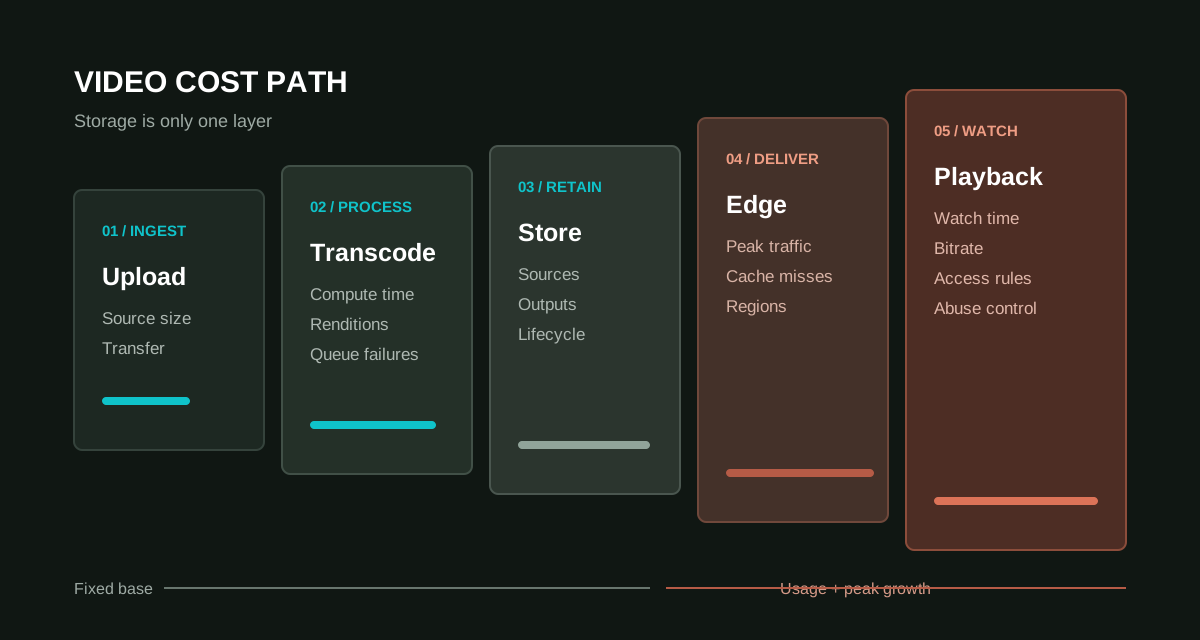
The source file is only the beginning
Devices and networks require different bitrate and resolution. A high-quality source can become several renditions plus HLS or DASH segments. Transcoding consumes compute, outputs multiply storage, and segment count raises request volume. Not every interview, screen recording, animation, and film needs the same ladder.
| Cost layer | Primary variables | Useful signals |
|---|---|---|
| Processing | Duration, resolution, codec, rendition count | Transcode minutes, failures, queue time |
| Storage | Sources, outputs, captions, retention | Total capacity, per-title size, growth |
| Delivery | Watch time, bitrate, region, cache hits | Edge traffic, origin traffic, requests |
| Control | Signing, permissions, hotlink abuse | Authorization requests, rejects, anomalies |
Monthly averages hide launch and live-event peaks
Course releases and events concentrate demand. A cold cache can suddenly multiply origin traffic and exhaust source bandwidth or connections. Estimate concurrency, average bitrate, primary regions, and likely hot titles; verify cache behavior, origin restriction, alerting, and live-stream redundancy before an important window.
Access control has an operating cost
Public video can use stable URLs. Paid, internal, or licensed content may require login, signed URLs, expiry, region limits, or DRM. Each layer adds authorization, clock, logging, support, and diagnosis work. Match control to content value rather than degrading every legitimate viewer in pursuit of impossible perfect protection.
Origin traffic is a health signal for cache policy
Random per-viewer query strings, incorrect cache keys, or overwritten URLs can force identical segments back to origin. Version content deliberately and make the signature cover access without destroying reuse.
Separate hot, warm, and cold media
Current lessons and popular programs need fast reads and edge presence. Historical titles can reduce standing cost. Sources and regulated archives prioritize recovery and permission. Cleanup must distinguish sources, renditions, captions, thumbnails, and business records.
Use unit economics to judge healthy growth
- Inventory duration, source size, and required renditions by content type.
- Estimate normal and peak watch time, region, and bitrate.
- Measure edge traffic, origin traffic, storage, and transcode minutes separately.
- Alert on signing failures, abnormal download, origin spikes, and queue backlog.
- Review low-access titles, orphan outputs, and lifecycle execution monthly.
Video cost is manageable when it is explainable. Separating processing, storage, delivery, and control shows whether growth comes from real viewing, more content, or a broken configuration.