
When a global website is fast in one region and slow in another, the reflex is often to replace the CDN or add servers. Yet performance belongs to the entire request path: DNS destination, TLS negotiation, edge cache state, origin distance, application response, asset weight, and third-party scripts. Changing one component can increase cost without reaching the bottleneck.
A reliable optimization process starts with segmented measurement. Break the first visit into resolution, connection, encryption, first byte, resource transfer, and page usability, then identify whether the delay belongs to entry, static delivery, dynamic work, or browser execution.
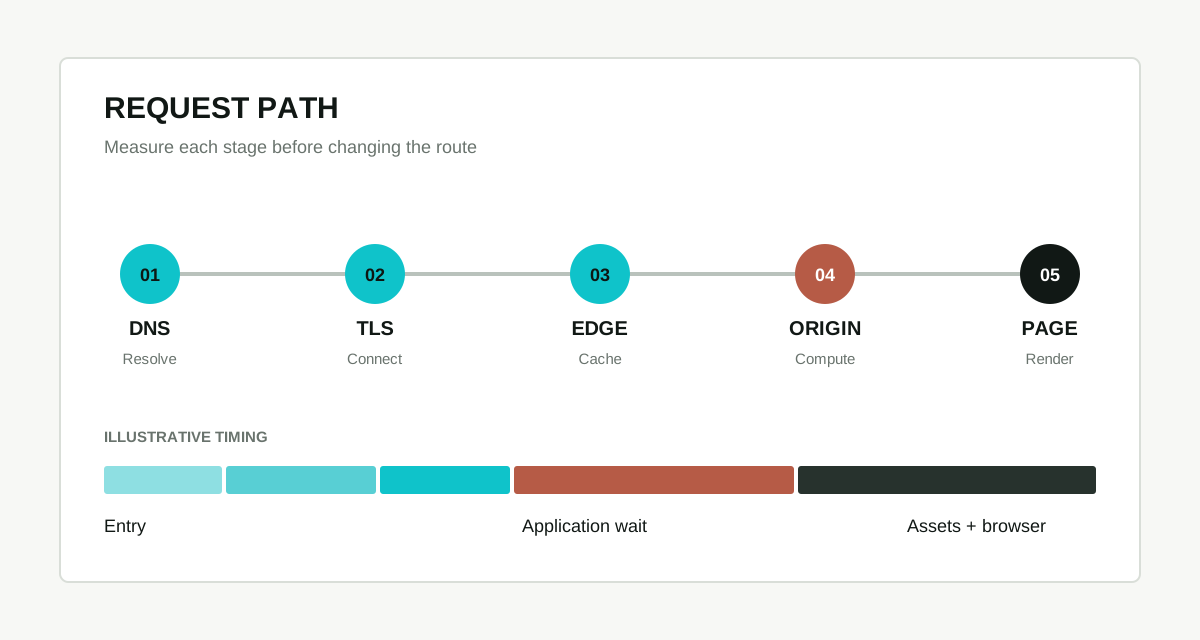
Separate network latency from a slow page
Network latency is round-trip time. A slow page may instead come from large images, blocking JavaScript, fonts, serial APIs, or rendering work. CDN can put static files near a visitor while a multi-megabyte hero, external tags, and a distant API still make the site feel slow.
Measure DNS, connection, TLS, TTFB, critical-resource completion, and interaction time under stated location, device, and network conditions. Mobile access often exposes problems hidden by an office connection.
DNS and TLS determine whether the request starts cleanly
Authoritative DNS availability, CNAME depth, TTL, and record consistency affect entry. TLS depends on certificate chain, protocols, hostname coverage, and redirects. Correctness comes first: an inconsistent IPv6 record or incomplete chain causes failure, not merely a few extra milliseconds.
| Stage | Common symptom | Verify |
|---|---|---|
| DNS | Slow first visit or different results by network | Authority, record chain, TTL, IPv4 and IPv6 |
| TLS | Older devices fail or handshake is slow | Chain, protocol, hostnames, redirects |
| Edge | The same asset alternates between fast and slow | Node selection, cache state, origin ratio |
| Origin | Dynamic pages and APIs stay slow | Region, application time, database, dependencies |
CDN performance depends on cache hits, not an enabled switch
Frequently changing URLs, short freshness, uncontrolled query parameters, or non-cacheable headers turn an edge into an expensive proxy. Conversely, caching authentication or personalized data can expose stale or private content. Apply long rules to immutable versioned assets, controlled freshness to HTML, and route-specific decisions to APIs.
Dynamic requests must account for compute and data location
CDN cannot automatically shorten every dynamic request. A registration form may still cross regions for a database and mail provider. Decide which responses can cache, which work can become asynchronous, and whether additional regions are justified.
Third-party scripts are external operational dependencies
Analytics, chat, maps, fonts, captcha, and marketing tags may block rendering or retry on failure. Inventory purpose, load timing, data handling, and fallback. Delay non-critical tags and give critical integrations a degraded behavior.
Use a continuous baseline instead of one speed score
- Define primary regions, devices, and pages rather than relying on a global average.
- Record DNS, TLS, TTFB, transfer weight, and business completion time.
- Separate edge hits, origin requests, and dynamic APIs.
- Alert on meaningful degradation and retain before-and-after data for changes.
- Review third parties, image weight, cache rules, and origin capacity monthly.
The goal is not one attractive benchmark. It is a stable, explainable, observable user journey in the markets that matter.